
Introduction
When we talk about Sony XR vs Other TV Processors, the real difference is not just about higher brightness or stronger colors. It is about how intelligently a TV understands and processes the entire scene. Sony’s Cognitive Processor XR is designed to analyze content in a way that mimics human perception, rather than applying simple digital enhancements. This fundamental difference is what separates Sony XR models from conventional televisions that rely on basic image-processing ICs.
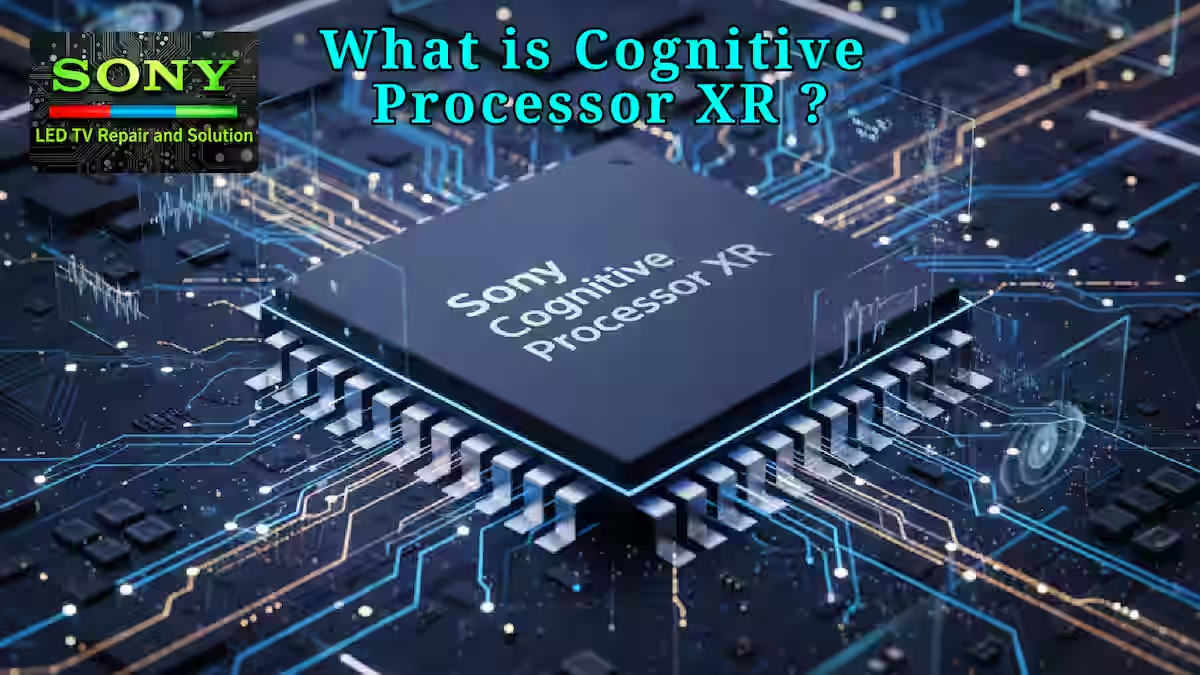
What Is Cognitive Processor XR?
The Cognitive Processor XR is the main processing engine used in Sony’s premium BRAVIA XR models. Traditional TV processors typically adjust picture elements separately—contrast is boosted independently, sharpness is increased artificially, and colors are saturated without understanding the full scene.
In contrast, Cognitive Processor XR performs cross-analysis. It examines thousands of elements at once—brightness, shadow detail, depth, focus area, motion, texture, and color balance. Instead of blindly increasing intensity, it detects the focal point of a scene (for example, a face in a close-up shot) and enhances it naturally while keeping the background balanced. This results in a picture that looks realistic rather than digitally over-processed.
Scene Recognition and Focal Point Detection
One of the biggest differences in Sony XR technology is scene recognition. The processor identifies key objects such as human faces, foreground subjects, and moving elements. It then adjusts contrast, depth, and color precision specifically around those focal areas.
Conventional processors treat the entire frame equally. Sony XR prioritizes what the human eye naturally focuses on. This improves realism, especially in cinematic content where lighting and shadow transitions are critical.
Advanced Color Reproduction and RGB Backlight Control
In newer generation models, Sony has introduced independent-drive RGB LED backlight technology. Unlike standard TVs that use a white LED backlight with color filters, Sony’s advanced system controls Red, Green, and Blue LEDs separately.
This provides:
- Wider color gamut coverage (near DCI-P3 standards and high BT.2020 coverage)
- More accurate saturation without overshooting
- Better color purity and reduced color bleeding
- Improved brightness control without washing out details
Combined with high-bit signal processing (up to 96-bit internal processing), the system produces smoother gradients, better shadow detail, and more refined highlight control. Blacks appear deeper without crushing detail, and bright scenes maintain clarity.
Motion Handling and Clarity
Fast-moving scenes—such as sports, action movies, or gaming—often expose weaknesses in traditional processors. Blur, motion artifacts, and detail loss are common in basic TV IC designs.
Sony XR improves motion clarity by dynamically controlling frame processing and brightness during movement. Instead of inserting artificial frames that can create distortion, the processor maintains sharpness while preserving natural motion. This is especially noticeable in high-speed scenes where fine details remain visible.
HDR Performance and Dynamic Range
High Dynamic Range (HDR) content demands precise brightness and shadow balance. Many standard TVs increase brightness globally, which can cause highlight clipping and shadow loss.
Sony XR analyzes HDR content scene by scene. It adjusts peak brightness, tone mapping, and contrast dynamically to preserve both dark and bright details simultaneously. This results in a more balanced and cinematic HDR experience.
Audio-Visual Synchronization
Another area where Sony stands apart is synchronized audio processing. The Cognitive Processor XR aligns sound positioning with on-screen action. When a character speaks from a specific part of the screen, the audio feels like it originates from that exact location.
Basic TVs rely on standard stereo output without spatial awareness. Sony’s approach enhances immersion by combining visual intelligence with directional sound accuracy.
How Sony XR Differs from Traditional TV ICs
Traditional TV processors:
- Apply separate picture adjustments
- Rely on white backlight + color filters
- Offer limited motion optimization
- Provide basic audio output
- Lack scene-based intelligence
Sony XR processors:
- Perform cross-scene cognitive analysis
- Use advanced RGB backlight control (in newer models)
- Improve motion clarity dynamically
- Enhance HDR tone mapping intelligently
- Synchronize audio with visual focus
Final Conclusion
When comparing Sony XR vs Other TV Processors, the difference goes beyond simple brightness or resolution numbers. Sony’s Cognitive Processor XR introduces intelligent scene understanding, advanced color precision, improved motion handling, enhanced HDR control, and synchronized audio-visual performance. Instead of acting as a basic enhancement chip, it functions as a smart visual engine that processes content closer to how humans naturally perceive images and sound. For viewers who prioritize realism, cinematic depth, and balanced picture performance, the advantage in Sony XR vs Other TV Processors becomes clearly noticeable in everyday viewing.
SM4080 Circuit Diagram Complete Guide
Sony KLV-32S400A 2 Blink Error Guide

Shaukat Ali has over 30 years of experience in LED TV repair, specializing in chip-level repair work. He is an expert in Sony LED TVs, and also repairs other major brands like Samsung, TCL, Orient, and Haier. His expertise includes display panel faults, motherboard issues, power supply circuits, T-Con, and HDMI faults. Based in Lahore, he shares real-time fault finding cases from daily repair work to help technicians and learners with practical experience.
📞 Contact: +92 321 4066054